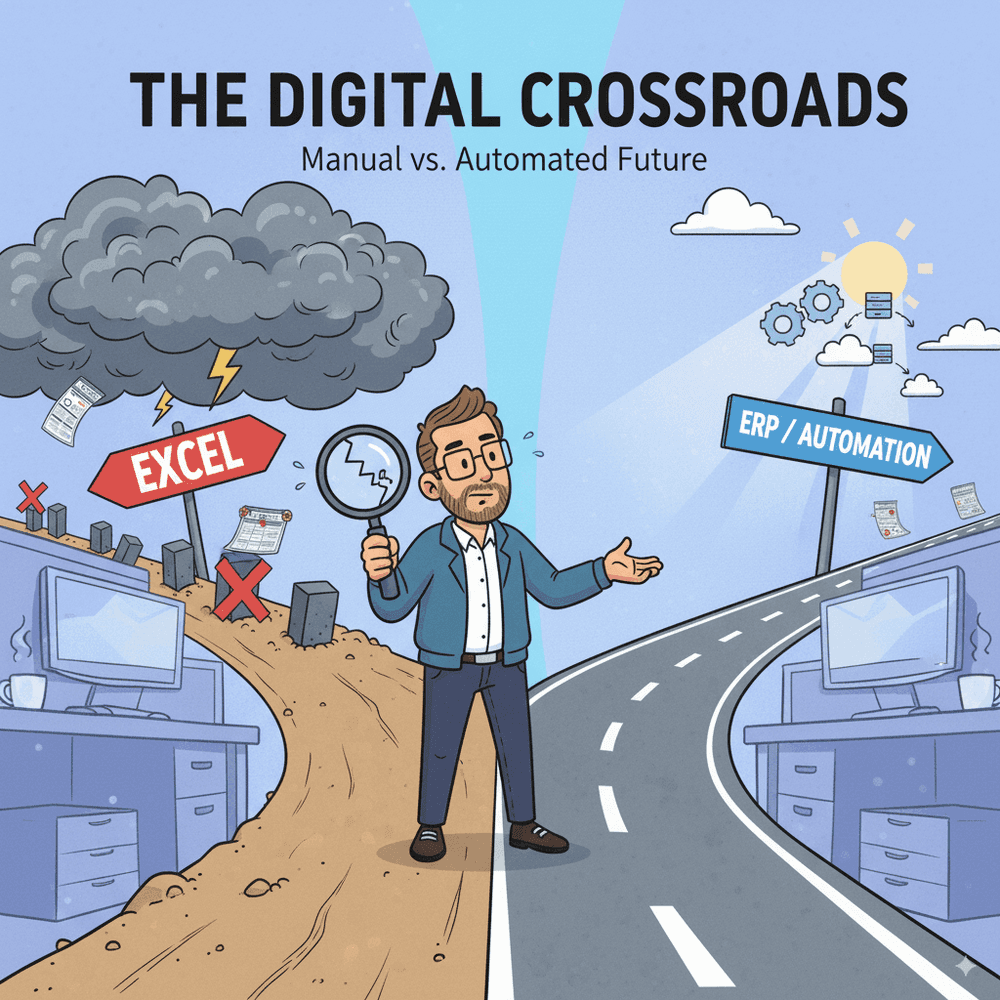
Every SME hits that crossroads sooner or later - when the trusty Excel sheets that once ran everything start feeling more like a roadblock than a tool. But taking the leap to a full ERP system feels risky, expensive, and downright overwhelming. So, what’s the smarter move? Stick with what’s familiar, or invest in something that promises scale but drains your budget and patience? This dilemma keeps business owners up at night, and the answer isn’t as simple as it seems. Let’s break down why this decision matters - and how modern alternatives are quietly rewriting the rules of SME growth.
Key Takeaways (Q&A Format)
Q: Why do SMEs hesitate between Excel and ERP?
A: SMEs often struggle to balance cost, flexibility, and growth needs. Excel is familiar but limited, while ERP systems are expensive and complex to implement.
Q: What are the main drawbacks of ERP for SMEs?
A: High licensing costs, long implementation cycles, complex training, and limited flexibility make ERP systems difficult for small and mid-sized businesses.
Q: How do Excel alternatives help SMEs bridge the gap?
A: Excel alternatives like Creviz offer real-time dashboards, automation, and modular workflows, giving ERP-level functionality without the overhead or cost.
Q: When should SMEs switch from Excel to an alternative or ERP?
A: When team size grows, operations become complex, or compliance and reporting needs demand centralized, accurate, and automated systems.
Q: Can SMEs achieve ERP benefits without full ERP investment?
A: Yes. Custom Excel alternatives provide scalability, collaboration, and workflow automation, letting SMEs grow efficiently without ERP’s complexity.
Why SMEs Feel Torn Between Excel and ERP
SME leaders often face a tough decision: stick with familiar spreadsheets or invest in a full ERP system. Excel is low-cost, flexible, and familiar, but it struggles with growth, collaboration, and automation. ERP promises centralized control and structured workflows but comes with high costs, long implementation times, and complexity.
What Are the Main Drawbacks of ERP for SMEs?
While ERP systems are powerful, they present challenges for small and mid-sized businesses:
- High cost: Licenses, maintenance, and ongoing support can run tens of thousands of dollars annually.
- Long implementation: ERP deployment often takes months, delaying ROI.
- Complexity & training: Teams must adapt to new processes, which can disrupt productivity.
- Limited flexibility: Customizing ERP for unique workflows often requires additional modules or consultants.
For many SMEs, these factors make ERP a risky or impractical solution in the early growth stages.
Why Excel Isn’t Enough for Growing SMEs
Spreadsheets work well for small-scale operations but fall short as teams expand:
- Manual tasks & repetitive entry: Copy-paste errors waste time and create inaccuracies.
- Version conflicts: Multiple team members editing the same file can cause confusion.
- Data silos: Information trapped in separate sheets prevents clear visibility.
- Limited collaboration: Remote or cross-department teams struggle with real-time updates.
SMEs often realize too late that staying on Excel creates hidden costs and operational bottlenecks, Check out our in-depth breakdown of Excel limitations and solutions for SMEs.
How Excel Alternatives Bridge the Gap
Excel alternatives like Creviz are designed to deliver ERP-level benefits without the drawbacks:
- Real-time dashboards: Consolidate data across teams for instant insights.
- Workflow automation: Reduce manual entry, approvals, and notifications.
- Modular & scalable: Add new departments or processes without disrupting existing workflows.
- Lower cost & faster adoption: Minimal training and no lengthy deployment like ERP.
These alternatives give SMEs control, flexibility, and accuracy while keeping costs manageable.
ERP vs Excel Alternatives: Which One Is Right for Your SME?
Choosing between a ERP and modern Excel alternatives can be confusing for growing SMEs. Here’s a clear comparison to help you decide what truly fits your business needs.
When Should SMEs Consider Moving From Excel to ERP or Alternatives?
Key signs your business has outgrown spreadsheets:
- Team size increases beyond a few users
- Projects span multiple departments
- Compliance or reporting requirements demand accuracy
- Excel performance issues slow operations
Tip: SMEs often find Excel alternatives like Creviz are the optimal middle ground — providing automation, visibility, and collaboration without ERP’s overhead.
How Creviz Helps SMEs Get ERP-Level Functionality Without the Overhead
Creviz builds custom, cloud-based applications tailored to SME workflows:
- Centralized dashboards for sales, operations, and finance
- Role-based permissions for secure collaboration
- Automated workflows and real-time reporting
- Scalable solutions that grow with the business
These tools allow SMEs to achieve the control and insight of ERP without long deployments or high costs.
Choosing the Right Tool for Growth
SMEs don’t need to choose blindly between Excel or ERP. Excel alternatives like Creviz provide the best of both worlds: flexibility, automation, collaboration, and scalability.
Ready to move beyond spreadsheets?